Much has changed in the world of advertising from the picture painted by Mad Men. Shelly Lazarus ’70, Chairman Emeritus, Ogilvy & Mather, was one of the women helping pioneer these changes. Making the journey from ‘the only woman in the room’ to CEO and Chairman of Ogilvy gives Lazarus a lot to reflect on in the world of business, branding, and leadership.
“Being the only woman in the room in an industry where most of what was being sold at the time was to women was remarkably powerful,” Lazarus notes. This was a dual power, driving value both in the workplace and for the client by providing more accurate perceptions about a target audience at a time when decision-makers didn’t have the breadth of data in front of them that exists today.
At the time that Lazarus entered the advertising world, typing was in many ways the only skill that was expected of women. Having been inspired by the women’s movement of the time, this expectation was disheartening to her. “I must have looked so crestfallen at some interview, when some recruiter was telling me this, that she said, ‘You know, I bet if you got an MBA, they couldn’t make you type.’ Frankly, I didn’t even know what an MBA was. But I found out.” After enrolling at Columbia Business School in 1968, as one of the very few women in the School at the time, she took great pleasure in her marketing classes, and that kicked off her future career.
A lack of women in the business side of the ad world also impacted Lazarus’s leadership style, as she recalls, “I really didn’t have any [women] role models… that turned into something wonderful for me, actually, because I just was myself from the beginning.” She says this focus on authenticity has always been crucial to being a strong leader, and it will be increasingly important as the Internet and social media further drive people to expect and demand transparency from their leaders and corporations.
Authenticity, Lazarus remarks, is also key to becoming a leading brand. “If people ask me what’s important when you think about branding,” Lazarus told AdAge, “it’s understand your essence, figure out who you are, and then consistency — maniacal consistency — is really what makes for strong brands.” Sadly, despite growing attention to exactly this point, companies still don’t always fully value the strength of a brand and its associations. “[I’m] flummoxed when a company buys another company because they believe in the brands, and then, within the space of six months, they fire all the people who have been there forever.”
Oglivy & Mather is renowned for building long-term relationships with both its clients and its employees. Lazarus believes developing these types of relationships can help agencies play the role of brand steward at times when changes within a company may drive it to lose focus on the perceptions of its brands.
As for where the future of brand building is heading, during her recent Marketing Hall of Fame speech, Lazarus highlighted a huge contrast from her early years in the ad world, “[Back then] you could run two campaigns per year, and the only choice was which magazines would get to run the campaigns—Ladies Home Journal, Better Homes and Gardens,or Cosmopolitan … I used to start presentations with, ‘Imagine if you could engage a customer as an individual.’ And now you actually can.” The marketing world is abuzz with the concept of personalization, but most would admit that there is still a long way to go before consumers experience such a relationship with a majority of their favorite brands.
We are delighted to be hosting Shelly Lazarus ’70, at a special panel at the BRITE ’16 Conference honoring Columbia Business School’s Centennial. She will be joined by Lew Frankfort ’69, Chairman Emeritus of Coach; Russell Dubner ’00, CEO of Edelman US; and Nt Etuk ’02, Founder of YourGuru to examine “Is Past Prologue? The History and Future of Brand Building.”
Register now for BRITE and join us on March 7–8, 2016, at Columbia University.
BY MATTHEW QUINT

 It turns out that Nvidia has become a strong player in the automotive area by developing
 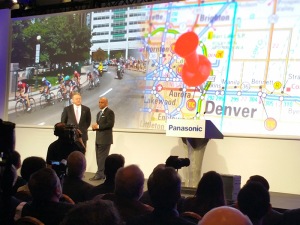 At the Panasonic press conference, I got to see the mayor of Denver, Michael Hancock, take the stage with Panasonic N.A. Chairman and CEO Joe Taylor to talk about their smart city initiative. Ford announced its efforts with Amazon to integrate the Echo system into future smart vehicles. Google appeared on stage at the LG press conference to highlight their partnership to develop more secure smart things. And Samsung had Microsoft’s Bryan Roper demonstrate natural language queries on Windows 10 that will drive their smart devices.


 Brand Leadership Blog